
QuotaGuard Shield gives Cashfree Secure ID API calls two fixed public IPv4 sources for IP whitelisting.
Add both subscription addresses to Cashfree's IP Whitelist two-factor method. Customer-controlled PAN, Aadhaar, bank, and KYC verification requests can then keep an approved source even when the application's native cloud egress changes.
Cashfree requires public IPv4 addresses for Secure ID Verification API whitelisting and allows no more than ten entries. See Cashfree's IP whitelisting requirements.
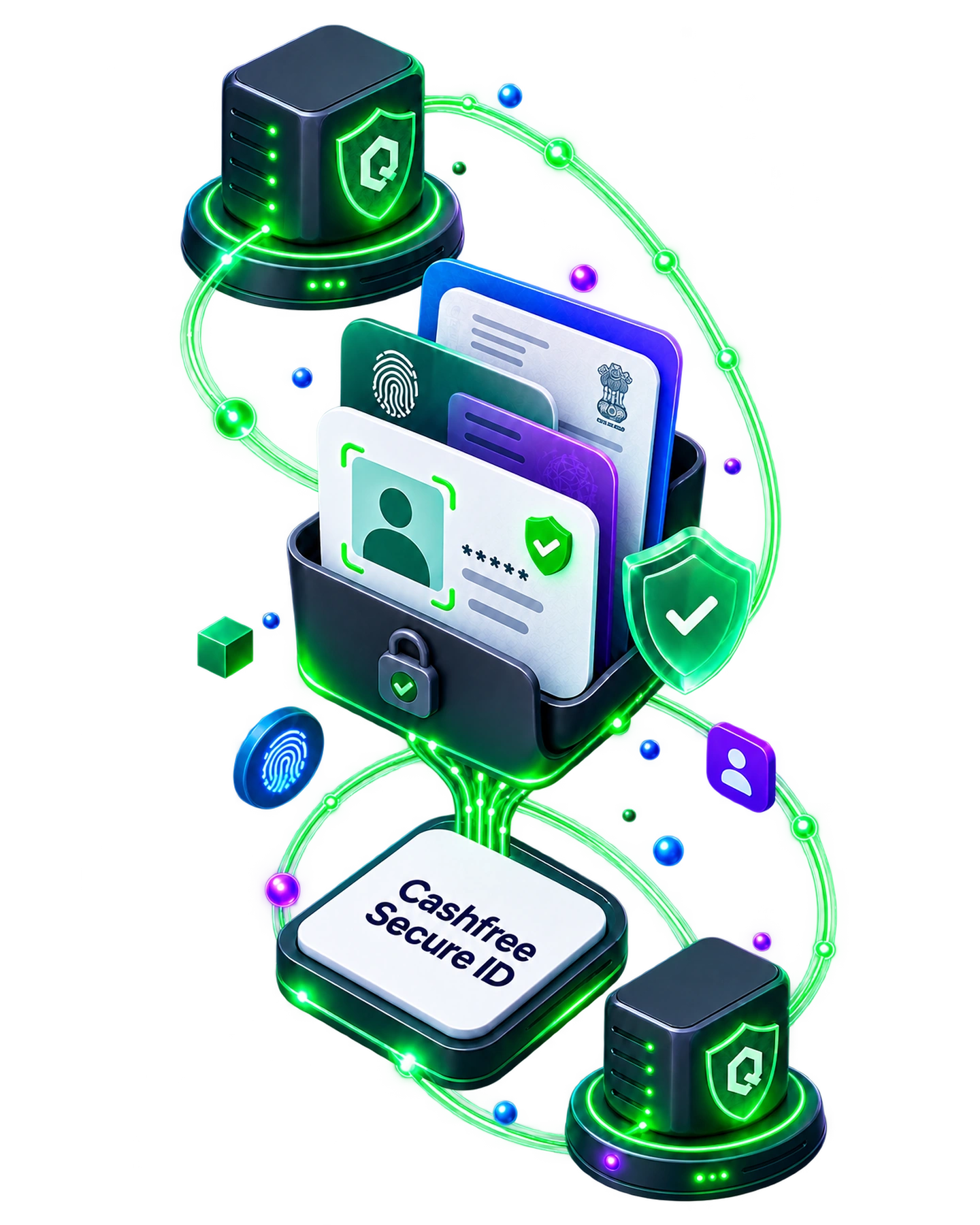
QuotaGuard supplies two public IPv4 addresses that fit Cashfree Secure ID's source-address requirement. Register both dashboard values so every request routed through the subscription arrives from an approved source.
Cashfree applies the IP Whitelist method to Verification APIs in both sandbox and production. The allowlist is configured inside the Secure ID card in the Merchant Dashboard.
Each QuotaGuard subscription receives two load-balanced static IPv4 addresses. Add both individual addresses from the dashboard, not the proxy hostname, because Cashfree evaluates the public source IP of the API request.
Cashfree Secure ID permits no more than ten whitelisted IP addresses. The QuotaGuard pair uses two entries, leaving the remaining capacity available for controlled migration or other application sources when needed.
Cashfree documents separate IP whitelisting for test and production environments. Add the QuotaGuard pair to each environment that will receive proxied requests rather than assuming a sandbox approval automatically carries into production.
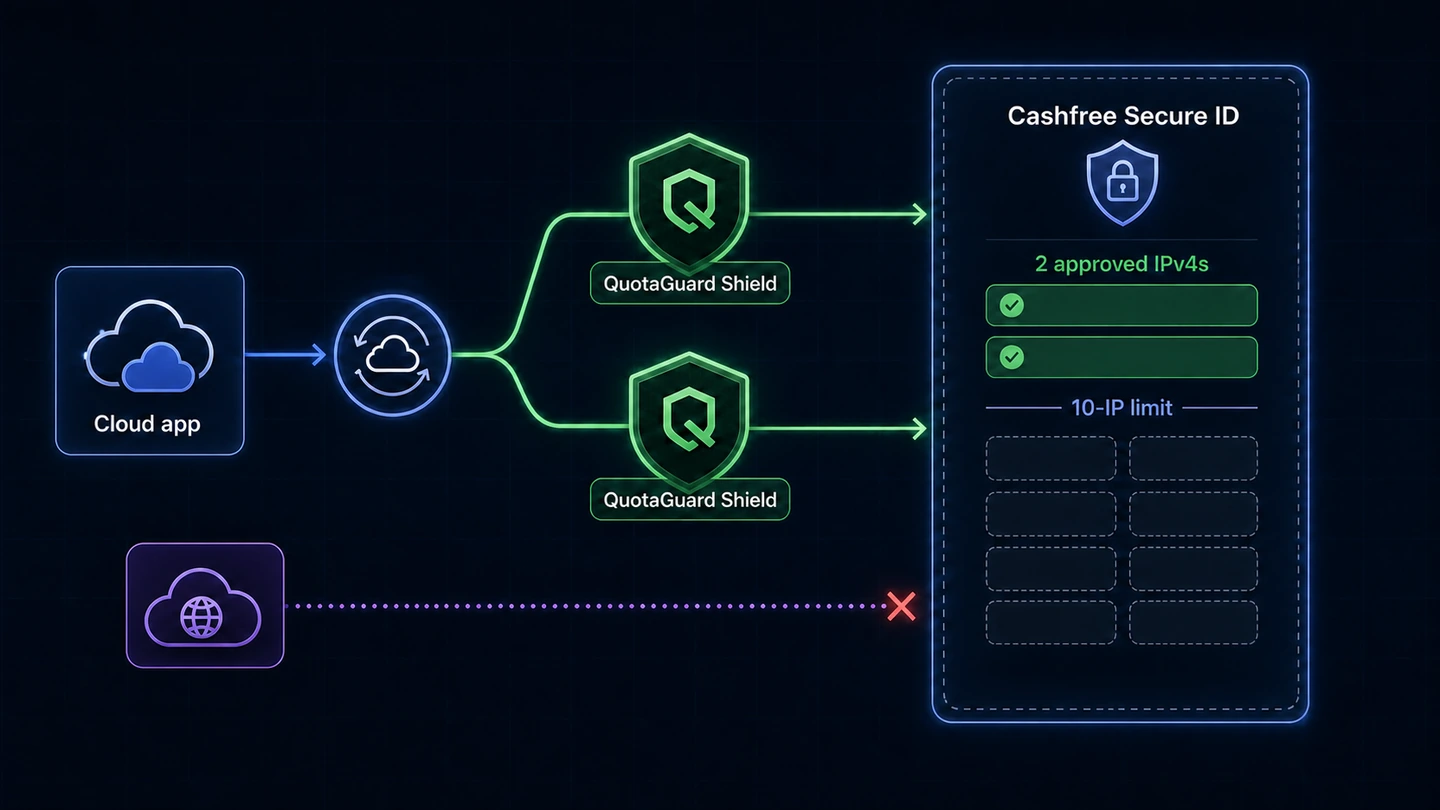
A stable source does not replace Cashfree authentication. The IP Whitelist method adds a network check alongside the application's existing credentials.
QuotaGuard changes the source Cashfree sees while preserving the application's HTTPS session and Cashfree's authorization model.
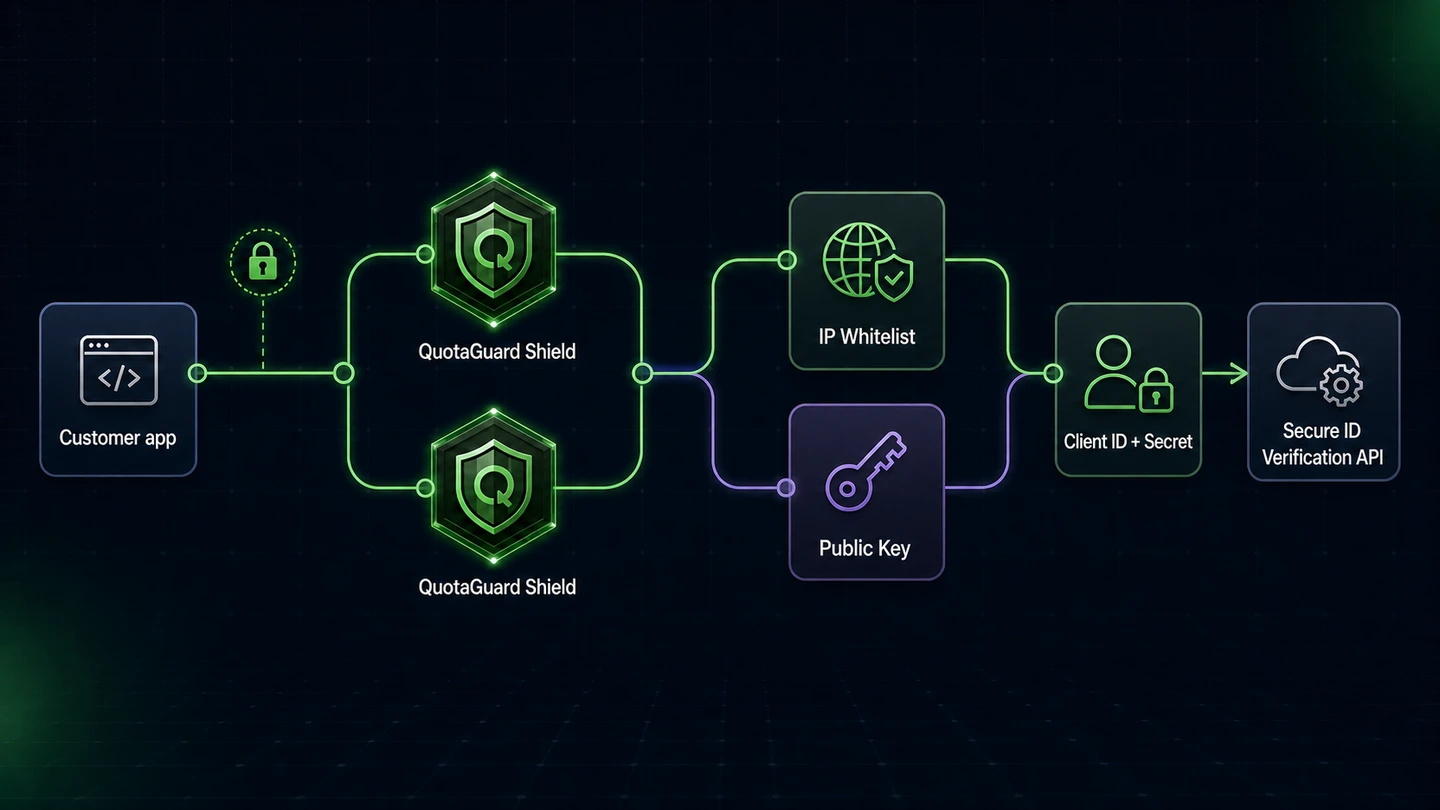
Secure ID requests continue to use the Cashfree-issued client ID and client secret. The QuotaGuard route supplies the approved network source, while Cashfree credentials still identify and authorize the merchant application.
Cashfree configures IP Whitelist as a Secure ID two-factor method and documents Public Key as an alternative for dynamic-IP merchants. Use the IP method when the policy goal is to accept requests only from registered public IPv4 sources.
QuotaGuard's regulated-data position requires Shield for PAN, Aadhaar, and similar identity-verification workloads. Shield encrypts the customer-to-proxy hop, and the application's HTTPS session to Cashfree remains encrypted without QuotaGuard decrypting the payload. QuotaGuard does not make the customer's full architecture compliant by itself.
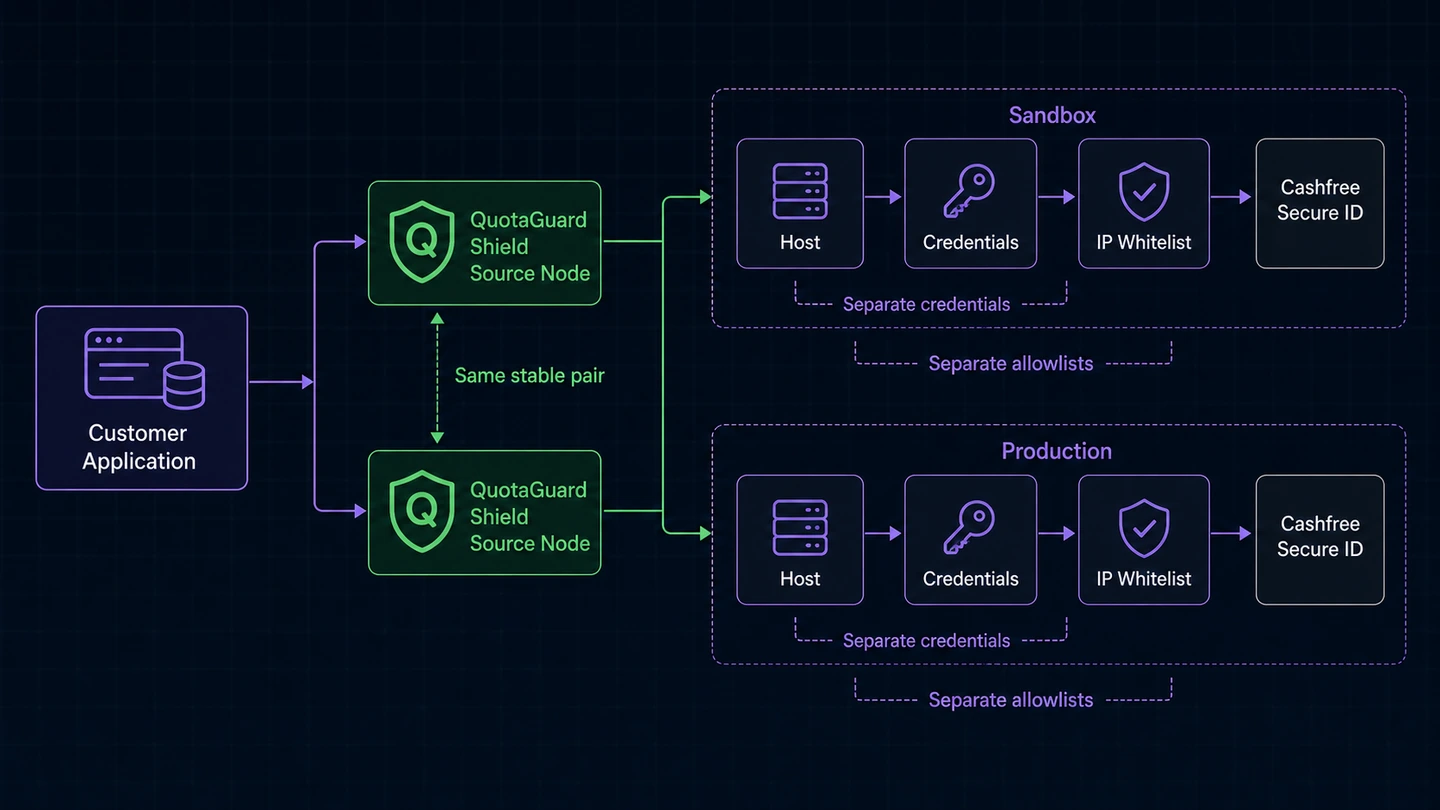
The same QuotaGuard subscription pair can provide a consistent source while a Secure ID integration moves from testing to production. Cashfree still keeps each environment's host, credentials, and allowlist configuration separate.
This lets the network identity stay predictable without collapsing Cashfree's environment boundaries or credential controls.
Cashfree uses different base URLs and credentials for sandbox and production. Route each environment's customer-controlled HTTPS calls through QuotaGuard, but keep the Cashfree host and credential set appropriate to that environment.
Cashfree Secure ID includes REST APIs for identity documents, bank accounts, business verification, biometrics, and onboarding workflows. QuotaGuard fits the server-side calls whose HTTP client can use an authenticated proxy. It does not change dashboard actions or third-party traffic outside the customer's control.
QuotaGuard balances requests across two static addresses and uses health checks with automated failover. Both addresses must remain on the applicable Cashfree allowlist so either healthy route can reach the Verification APIs.
Common questions about Cashfree Secure ID static IPs and QuotaGuard.
Does Cashfree Secure ID require a static IP?
Cashfree's Secure ID guide says public IPv4 whitelisting is required in sandbox and production when IP Whitelist is selected as the two-factor method. A changing cloud source would need repeated allowlist updates, while QuotaGuard gives the customer-controlled application two stable addresses to register. Cashfree also documents Public Key as an alternative two-factor method for merchants using dynamic IPs.
Where do I configure the Cashfree Secure ID IP whitelist?
In the Cashfree Merchant Dashboard, open Developers, find Two-Factor Authentication under the Secure ID card, and select IP Whitelist as the method. Cashfree then lets the merchant add public IPv4 addresses to the displayed grid. The Secure ID documentation permits no more than ten whitelisted addresses.
Which QuotaGuard addresses should I add to Cashfree?
Add both individual IPv4 addresses shown for the relevant QuotaGuard subscription. Cashfree does not support IPv6 or private address ranges for this setting. Do not add the QuotaGuard proxy hostname because Cashfree evaluates the public source address of the API request.
Does Cashfree use the same allowlist for sandbox and production?
No. Cashfree documents separate IP whitelisting for test and production environments, and the environments also use different hosts and credentials. Add both QuotaGuard addresses to every environment that should accept proxied calls. A sandbox entry should not be treated as production authorization.
Does an approved IP replace the Cashfree client ID and secret?
No. Cashfree Secure ID requests still use the Cashfree-issued client ID and client secret. The IP Whitelist method adds a source-address requirement alongside those credentials. QuotaGuard supplies the stable network source without changing the Cashfree identity or permissions attached to the credentials.
Which Cashfree Secure ID APIs can use this path?
Cashfree describes the allowlist as controlling its Secure ID Verification APIs, which include identity, document, bank, business, biometric, and onboarding services. The QuotaGuard path applies only to customer-controlled server-side HTTPS clients that can use an authenticated proxy. It does not make browser traffic or an uncontrollable third-party integration originate from the QuotaGuard pair.
Should I use QuotaGuard Static or Shield for Cashfree Secure ID?
Use QuotaGuard Shield for PAN, Aadhaar, KYC, and other regulated identity-verification data. Shield encrypts the customer-to-proxy hop, while the application's HTTPS session to Cashfree remains encrypted and QuotaGuard does not decrypt its payload. QuotaGuard Static can technically carry HTTPS, but it is not the QuotaGuard-supported product for regulated-data workloads. Neither product makes the customer or full architecture compliant by itself.
Can I get dedicated IPs for Cashfree Secure ID?
Yes. Dedicated IPs and proxy resources are included on direct Enterprise plans, currently $219 per month for QuotaGuard Static and $269 per month for QuotaGuard Shield. Starter, Production, and Business use shared static IP pairs. Each subscription still receives its own two-address pair to register with Cashfree.
How should I move an existing Cashfree integration onto QuotaGuard?
Configure the customer-controlled HTTP client to use the QuotaGuard route, confirm the request exits through one of the two subscription addresses, and add both addresses to the applicable Cashfree allowlist. Test a harmless operation in sandbox before repeating the environment-specific setup for production. Keep the prior approved route available until the proxied path has been validated.
Does this integration control Cashfree webhooks sent to my application?
No. This page covers outbound requests traveling from the customer's application through QuotaGuard to Cashfree Secure ID. Cashfree webhooks travel in the opposite direction from Cashfree to the customer's registered endpoint and require their own receiver, signature, and access-control design. QuotaGuard inbound is a separate product path and does not change the source addresses Cashfree uses for webhook delivery.
For over a decade, QuotaGuard has provided reliable, high-performance static IP and proxy solutions for cloud environments like Heroku, Kubernetes, and AWS.
Get the fixed identity and security your application needs today.