
Salesforce Static IPs
Secure, Load-Balanced Static IP Addresses for Your AppExchange ISV Integrations.
Built for Salesforce's OAuth Refresh Token IP Allowlist Requirement.
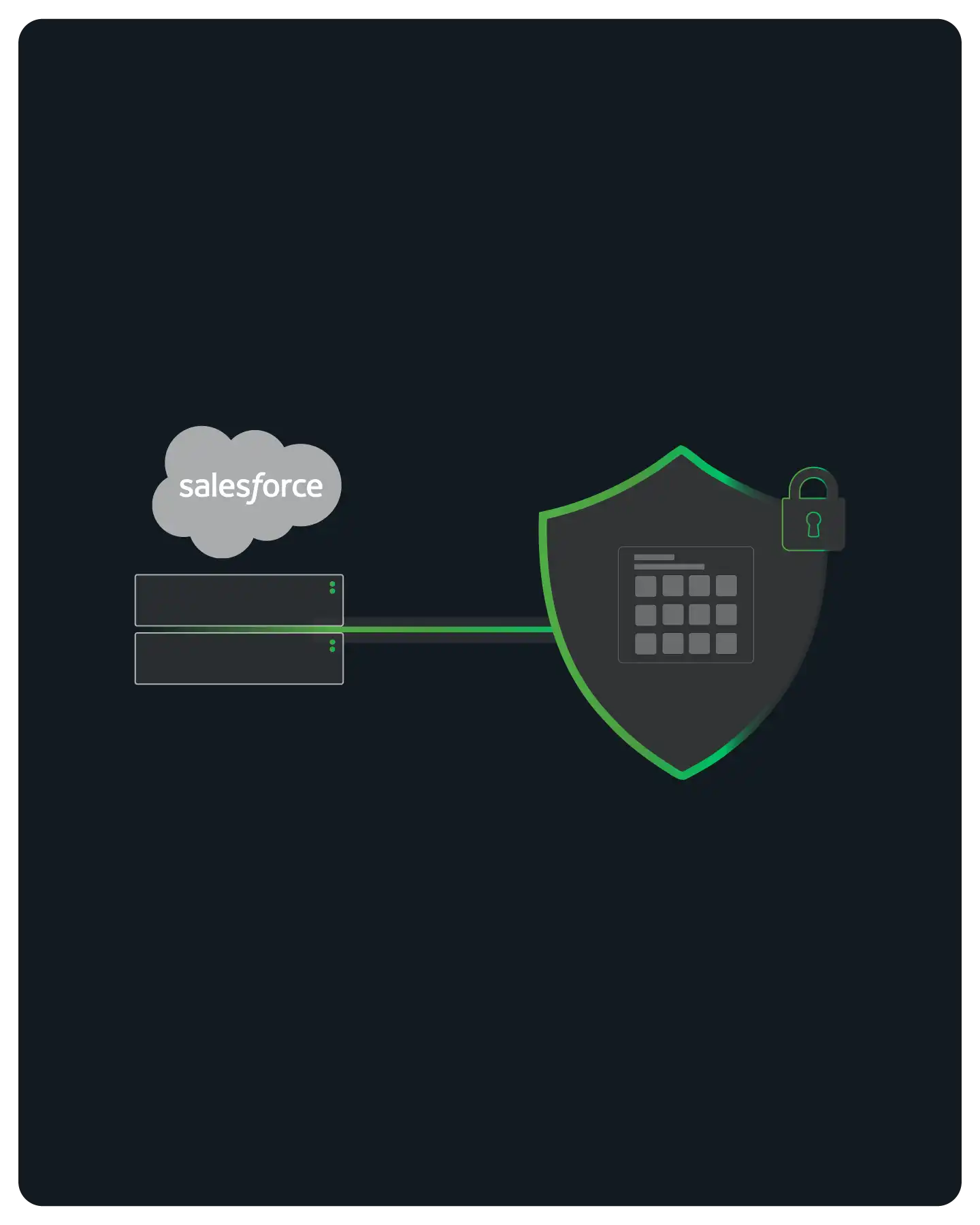
The Simple Path to Static IPs
When your AppExchange ISV integration needs to satisfy Salesforce's Refresh Token IP Allowlist requirement on an External Client App, QuotaGuard provides the simplest solution.

The Trusted Foundation: Reliability, Speed, and Support
All QuotaGuard solutions are built on a decade of experience and a high-availability architecture designed to scale with your AppExchange ISV business.
Load Balanced Pair of Static IPs
Each subscription has a load balanced pair of static IP addresses. If one IP fails, traffic automatically routes through your second IP with health checks and automated failover, guaranteeing zero downtime and zero manual intervention.
Salesforce's Refresh Token IP Allowlist supports up to 128 ranges and 256 total IPs, so adding both QuotaGuard IPs is straightforward.
Ultra-Low Latency and Global Reach
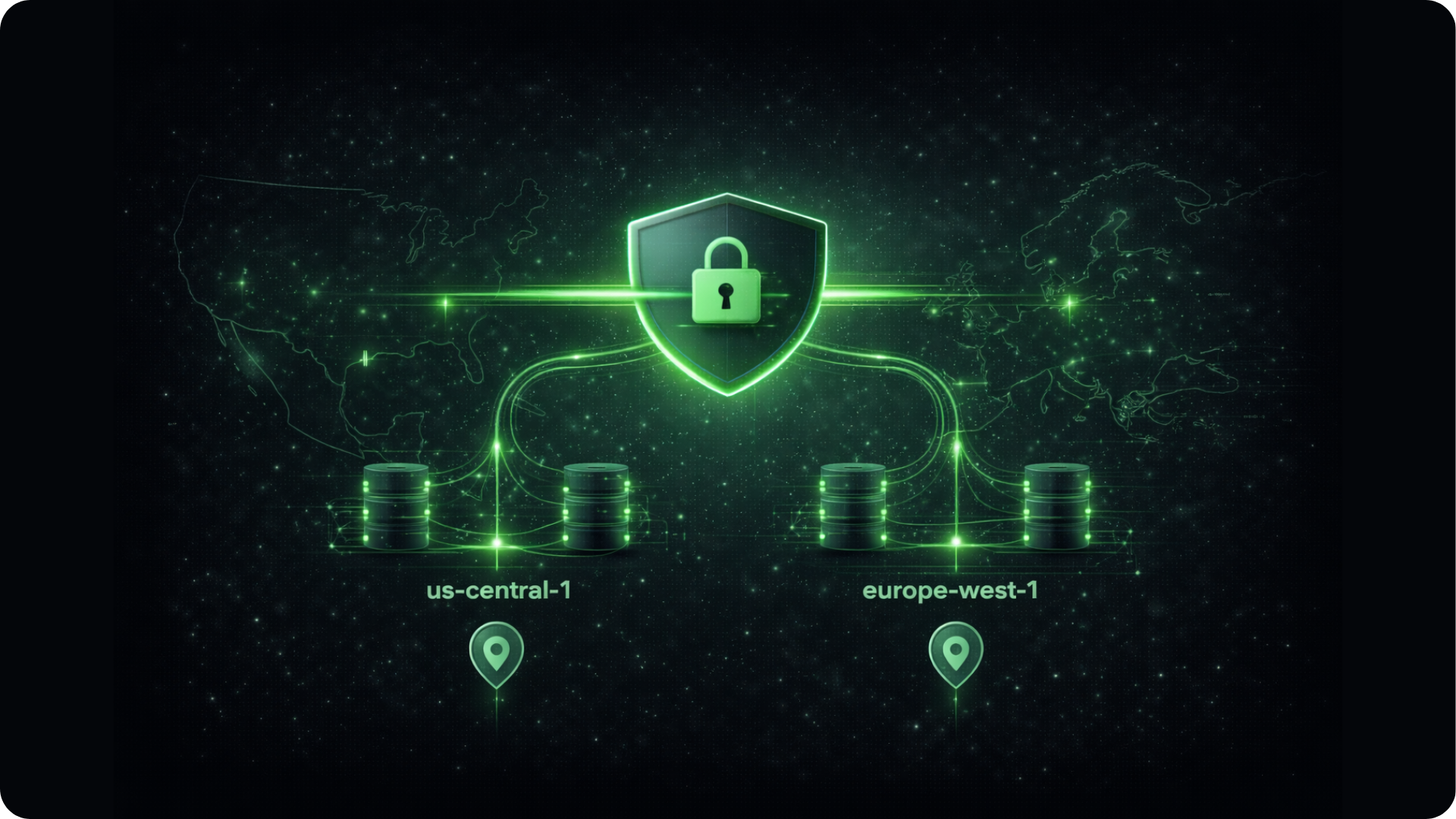
You select what app region you want for ultra-low latency. Our proxies run on 10 AWS regions, ensuring your traffic stays fast regardless of where your ISV infrastructure is hosted.
Region is set at sign-up and can be changed any time via support.
Demonstrated Reliability and Scalability
QuotaGuard has maintained 99.95% uptime.
With thousands of customers served, we provide a solution that is trusted and proven to scale, including the high-volume refresh token redemption workloads typical of established AppExchange listings.

Flexibility, Security, and Enterprise Control
Features that handle the toughest requirements, from server-to-server OAuth flows to regulated data handling and partial-compliance support during the Salesforce mandate transition.
FAQs
Common questions about Salesforce Static IPs and QuotaGuard.
No.
QuotaGuard solves the IP Allowlist requirement, per Salesforce's current position.
The other four controls (PKCE, Refresh Token Rotation, 30-day Idle Timeout, and IP Monitoring) are application-layer changes you implement in your own code or via Salesforce Setup.
QuotaGuard handles the network-layer requirement only.
We recommend reading Salesforce's official documentation on PKCE and RTR alongside setting up your static IPs.
Salesforce's Refresh Token IP Allowlist UI is documented for External Client Apps Manager only.
If your integration is still on a legacy 1GP-packaged Connected App, contact your Salesforce account team to confirm the IP registration path before configuring QuotaGuard.
The QuotaGuard side of the setup is the same in either case (a static IP pair is the prerequisite), but the Salesforce-side UI for adding the IPs to the allowlist is currently ECA-only.
Some ISVs are migrating to ECA via the full migration path or shipping a sidecar 2GP package containing only an ECA. Our support team can help you understand the QuotaGuard side once your Salesforce path is clear.
Probably not.
JWT Bearer flow integrations don't issue refresh tokens, so the Refresh Token IP Allowlist requirement is structurally inapplicable.
If your entire Salesforce integration is JWT Bearer (server-to-server with no user-context refresh tokens), you don't need a static IP for May 11 2026 compliance.
If you're running a mixed flow architecture where some paths use authorization code with refresh tokens, those paths still need the static IP.
Salesforce has indicated that the IP Allowlist requirement is not applicable to public-facing mobile applications, since mobile clients connect from arbitrary consumer IPs.
QuotaGuard's static IP solution is for ISV server-to-server integrations, not mobile clients.
If your AppExchange listing is exclusively mobile, you don't need a static IP for May 11 compliance.
QuotaGuard Static is the Builder's Choice for most Salesforce ISVs, focused on flexibility, speed, and securing standard OAuth API connections.
QuotaGuard Shield is the Buyer's Choice for ISVs handling regulated customer data through their AppExchange integration.
Shield offers end-to-end security with SSL Passthrough and an architecture designed specifically to meet strict HIPAA and PCI compliance requirements.
For the May 11 2026 IP allowlist requirement alone, Static is sufficient.
Shield becomes the right choice when your integration handles PHI, payment card data, or other regulated workloads.
Provision a load-balanced pair of static IPs from your QuotaGuard dashboard.
Add the QUOTAGUARDSTATIC_URL environment variable to your application infrastructure (Heroku, AWS Lambda, Render, Fly.io, or your platform of choice).
Configure your HTTP client or OAuth library to route requests to api.salesforce.com through the QuotaGuard proxy.
Then add both QuotaGuard IPs to your External Client App's Refresh Token IP Allowlist in Salesforce Setup.
Total setup time is roughly 2 minutes for the QuotaGuard configuration plus the time required to update the Salesforce allowlist.
No. Your static IP addresses stay the same through plan upgrades and downgrades.
This means you don't need to update your Salesforce IP allowlist or contact your customers when you change plans, which is critical during the May 11 mandate transition when stable infrastructure is at a premium.
Our No Hard Stops policy means we keep processing your requests even if you exceed your plan's bandwidth limit.
Refresh token redemptions, OAuth flows, and customer-facing API traffic continue uninterrupted while we contact you about an upgrade.
AppExchange listings can have unpredictable traffic spikes during Security Review re-submissions, customer onboarding waves, or marketing pushes, and QuotaGuard absorbs them.
No.
QuotaGuard plans are month-to-month with no minimum commitment or cancellation fees.
You can sign up, configure your IPs, and adjust your plan as your AppExchange listing scales.
Still have questions?
We don’t outsource Support to non-Engineers.
Reach out directly to the Engineers who built Shield to discuss your specific architecture, integration challenges, or compliance constraints here 👇
🚀 Ready to Get Started? Choose Your QuotaGuard Path
QuotaGuard STATIC
QuotaGuard SHIELD
Quotaguard has amazing customer service. Some of the best I've interacted with for B2B companies.
Whenever there are snags or setup issues, their support answers emails quickly and hops on zooms to debug with us.
Even with very little notice, they'll hop on zooms to debug. That is absolutely incredible.


Before I found QuotaGuard, I had tried to use Fixie Socks.
However, I couldn't get it to work even after downloading a separate library that they recommend (fixie-wrench). So I was relieved to find QuotaGuard.
The QuotaGuard team clearly cares about their product and their customers. I enjoyed my interactions with them, and their product seems reliable so far.
Overall a solid choice for Heroku/MongoDB Atlas builds.
Reliability Engineered for the Modern Cloud
For over a decade, QuotaGuard has provided reliable, high-performance static IP and proxy solutions for cloud environments like Heroku, Kubernetes, and AWS.
Get the fixed identity and security your application needs today.