Firewalls Require Static IPs ... and That Requirement Survives Every New Architecture

QuotaGuard Engineering
April 17, 2026
5 min read
Pattern

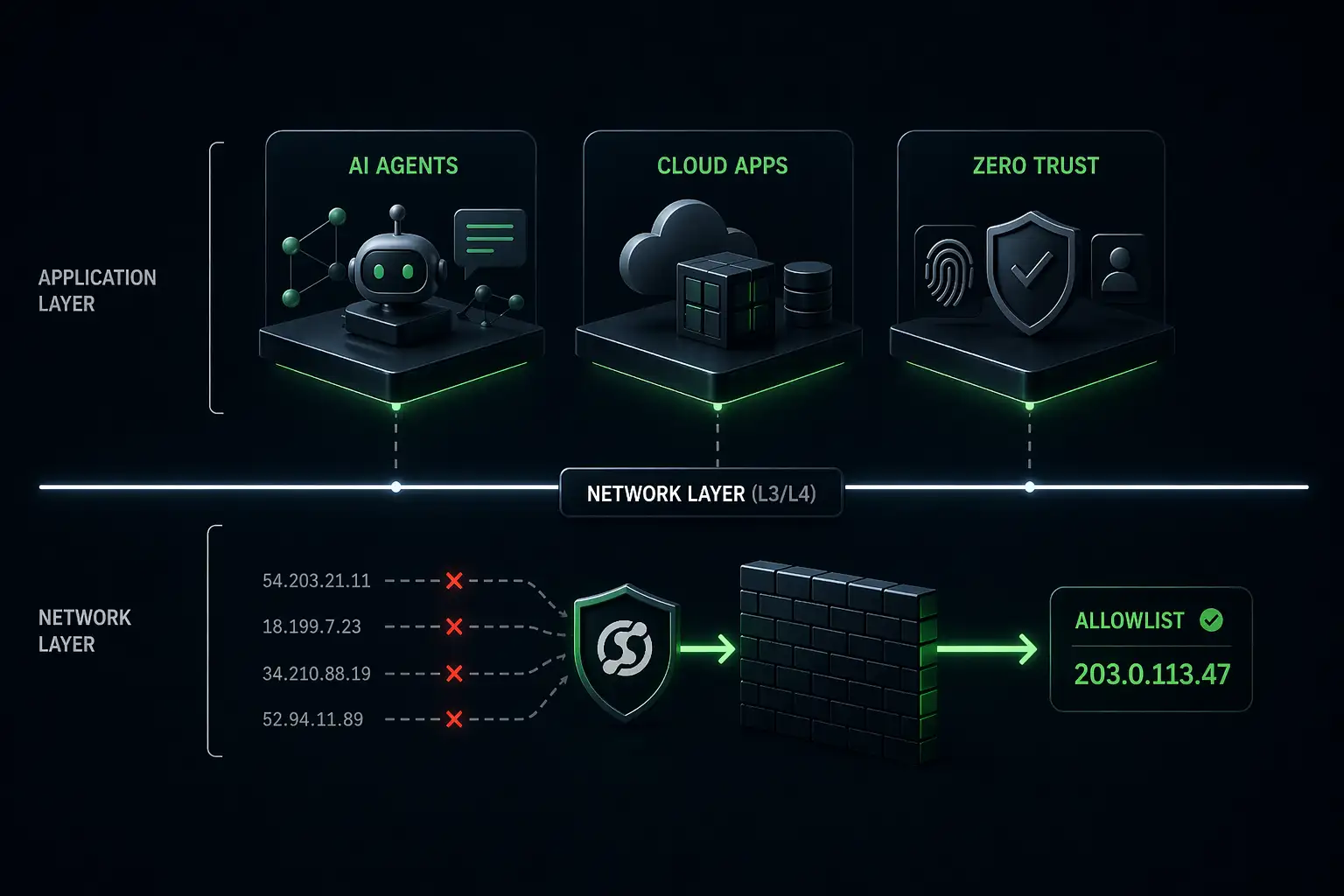
Firewalls allowlist by IP address at the network layer. Cloud apps get dynamic IPs. A static IP proxy like QuotaGuard fixes the gap in one environment variable.

I talk to developers every week who assume something has changed. Zero trust is everywhere. AI is in every stack. Surely nobody is still hardcoding IP addresses into a firewall rule. They are. Your bank's API is. Your health system's EHR is. Your enterprise customer's perimeter firewall is. The network layer doesn't care what year it is.

Firewalls Operate at the Network Layer, Not the Identity Layer

This is the part most developers miss. When a firewall decides whether to allow a connection, it's looking at a packet header. That header has a source IP address. The firewall compares it against its allowlist. Allow or deny. That's the entire decision.

It doesn't read your JWT. It doesn't check your OAuth token. It doesn't ask your identity provider. Those checks happen at the application layer, above the network. A firewall configured to allowlist 203.0.113.47 will drop your connection before your API key is ever seen if you're coming from a different address.

That's not a legacy quirk. That's how TCP/IP works. Packets have source addresses. Routers and firewalls act on those addresses. No amount of application-layer identity tooling changes what's in the IP header.

Cloud Apps Need a Static IP Proxy to Pass Firewall Allowlists

Every major cloud platform assigns outbound IPs from a large shared pool. AWS Lambda, Heroku, Render, Railway, Fly.io. Your function or container gets an address when it runs. It might get a different address next run. It will almost certainly get a different address if it scales or restarts.

That's fine for most traffic. For traffic that needs to reach an allowlisted firewall, it's a hard failure. You call the API from your Lambda. The source IP is 54.x.x.x today. The firewall allows it. Tomorrow it's a different address in the same range. The firewall drops it. Your pipeline fails at 2 AM and nobody knows why until someone checks the IP.

From our support tickets, this is one of the most common sources of intermittent API failures in cloud apps. It works in testing, breaks in production, and the error message ("connection refused," "403 forbidden") gives no indication that the IP address is the problem.

Static IPs Make Allowlisting Predictable and Auditable

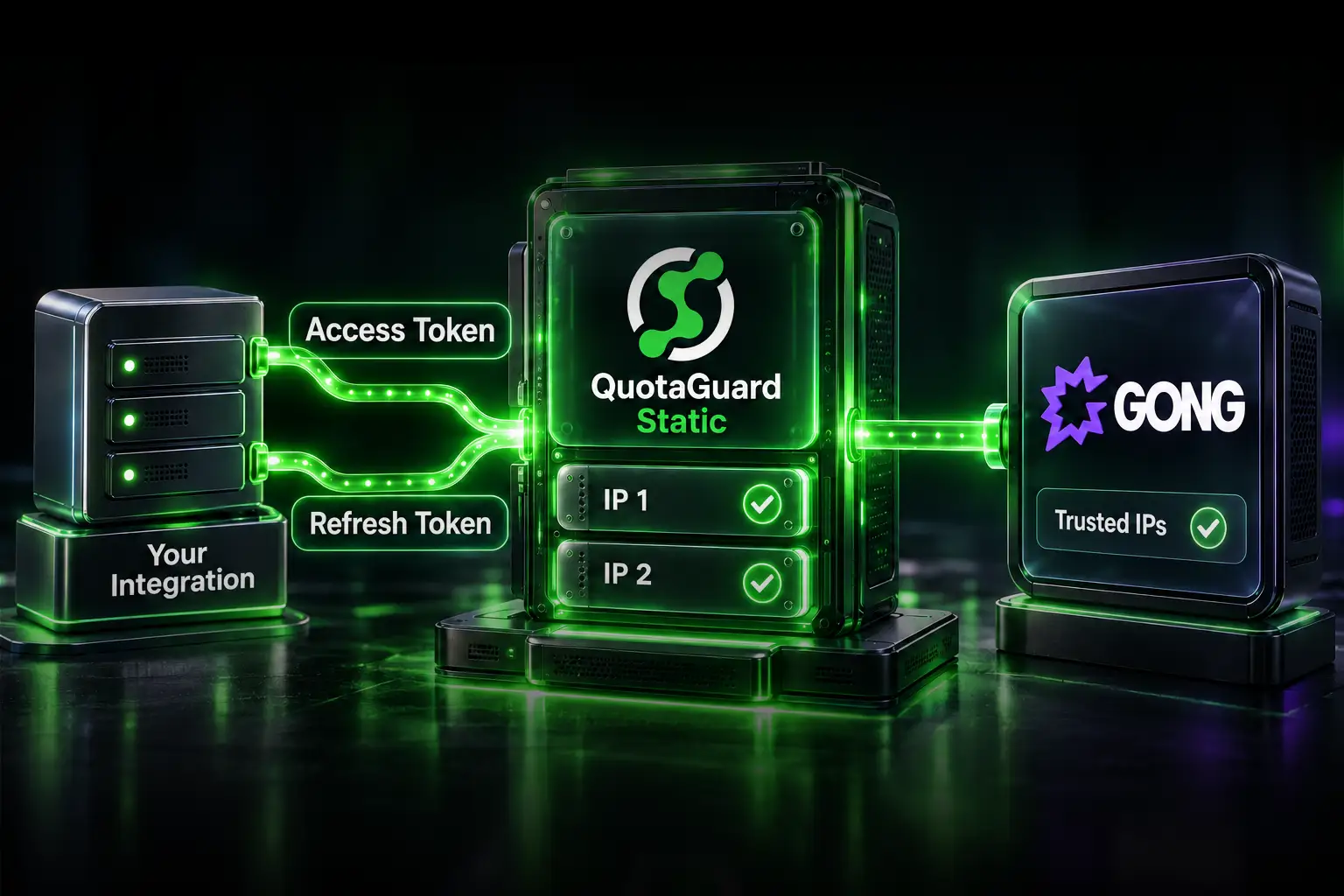
The fix is routing your outbound requests through a proxy that has a fixed IP address. Your app always leaves from the same address. You give that address to your API partner, your enterprise customer, or your firewall admin. It goes on the allowlist once and stays there.

With QuotaGuard Static, the setup is one environment variable:

QUOTAGUARDSTATIC_URL=http://username:password@proxy.quotaguard.com:9293

Then point your HTTP client at it. In Node.js with the https-proxy-agent package:

const HttpsProxyAgent = require('https-proxy-agent');
const fetch = require('node-fetch');
 
const proxy = process.env.QUOTAGUARDSTATIC_URL;
const agent = new HttpsProxyAgent(proxy);
 
const response = await fetch('https://api.yourpartner.com/endpoint', { agent });

In Python with requests:

import os
import requests
 
proxies = {
    'http': os.environ.get('QUOTAGUARDSTATIC_URL'),
    'https': os.environ.get('QUOTAGUARDSTATIC_URL'),
}
 
response = requests.get('https://api.yourpartner.com/endpoint', proxies=proxies)

That's it. Your outbound requests now come from a fixed IP. You give that IP to whoever runs the firewall. They add it to the allowlist. The intermittent failures stop.

QuotaGuard tip: only route the API calls that need whitelisting through the proxy, not all your outbound traffic. It's faster, cheaper, and easier to debug when something goes wrong.

AI Agents and Automated Workflows Still Hit the Same Firewalls

This is the question I've been getting more often lately. "We're moving to an AI agent architecture. Does this still apply?" Yes. More than before.

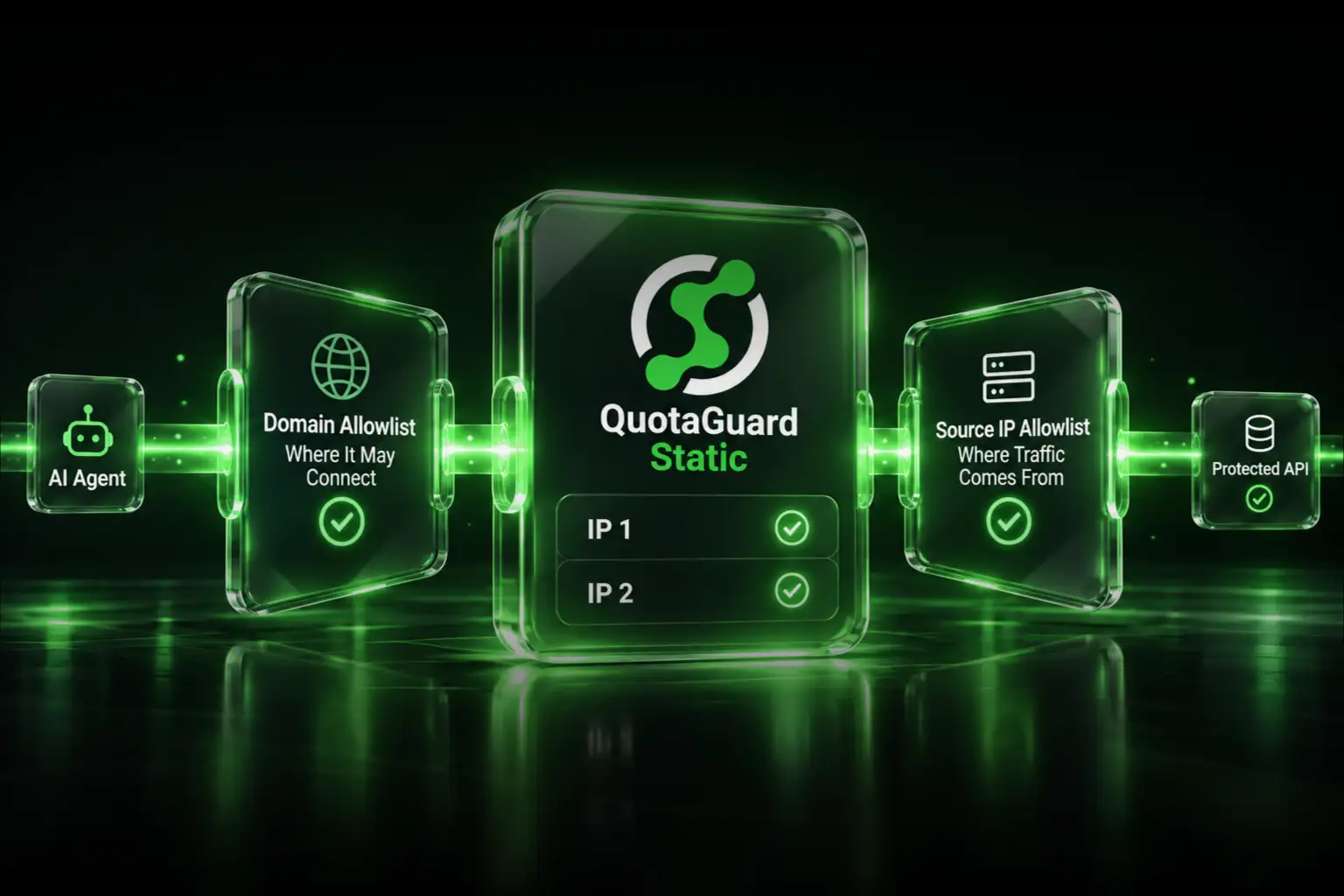
An AI agent making API calls is still making HTTP requests. Those requests still have source IP addresses. The financial data APIs, healthcare APIs, and enterprise systems that agents are increasingly being pointed at are exactly the ones most likely to have IP allowlisting in place. Banks don't relax their firewall rules because the caller is an LLM.

If anything, AI workflows make this more painful. An orchestrator running on Lambda spins up multiple functions, each with a different outbound IP. A multi-agent system hitting a single allowlisted API from a dozen different addresses is going to fail unpredictably and be very difficult to debug. The fix is the same: route the outbound calls through a proxy with a static IP.

Zero Trust Architecture Still Requires Static IPs at the Network Layer

Zero trust is real and it matters. "Never trust, always verify" is the right model for identity and access management. But zero trust is an application-layer and identity-layer framework. It doesn't replace network-layer controls. It adds to them.

Most zero trust implementations include network segmentation and egress filtering. Your traffic still passes through a firewall or a ZTNA gateway. That gateway still makes decisions based on source IP. Now in combination with identity signals, device posture, and other factors. But IP is still in the picture. Regulated industries layer zero trust on top of existing perimeter controls, not instead of them.

I've seen healthcare organizations running full ZTNA deployments that still maintain IP allowlists for their EHR integrations. The allowlist is part of their defense-in-depth strategy. Both things are true at once.

Regulated Industries Need SSL Passthrough, Not Just a Static IP

If you're routing financial data, healthcare records, or anything covered by HIPAA or PCI-DSS through a proxy, you need to think about what that proxy can see.

QuotaGuard Static uses a standard proxy model. QuotaGuard's infrastructure terminates and re-establishes the SSL connection. For most use cases that's fine. For regulated data, it means QuotaGuard is technically a third party that could see the data in transit.

QuotaGuard Shield solves this with SSL passthrough. The TLS connection runs end-to-end between your app and the destination. QuotaGuard routes the packets but never decrypts them. If you handle PHI, payment data, or anything where "a third party saw it in transit" creates a compliance problem, Shield is the right product. The setup is the same. Swap QUOTAGUARDSTATIC_URL for QUOTAGUARDSHIELD_URL.

Static IPs Cost Less Than One Support Incident

QuotaGuard Static starts at $19/month on the direct plan. The Starter plan is free to try (3-day trial, credit card required). Most small teams run fine on the $19 Starter or $49 Production plan.

Compare that to the cost of debugging an intermittent API failure that only happens in production, at scale, at unpredictable intervals, with an error message that doesn't tell you the IP is the problem. I've seen teams spend days on that. $19/month is not the expensive option.

Full pricing is at quotaguard.com/products/pricing. If your workload involves regulated data, start with QuotaGuard Shield. If it doesn't, QuotaGuard Static handles it.

The network layer is not going away. IP allowlisting is not going away. Set up a static IP once and stop thinking about it.

QuotaGuard Static IP Blog

Practical notes on routing cloud and AI traffic through Static IPs.

Reliability Engineered for the Modern Cloud

For over a decade, QuotaGuard has provided reliable, high-performance static IP and proxy solutions for cloud environments like Heroku, Kubernetes, and AWS.

Get the fixed identity and security your application needs today.