Point your app at QuotaGuard Static, set one environment variable, and every Shocklogic API request leaves from the same fixed IP your team can allowlist.

Shocklogic powers registration, abstract management, and attendee data for conferences and professional events. Their API restricts access by IP address. That's a reasonable security posture for a platform handling sensitive delegate data. It's also a hard blocker the moment your app runs on a cloud platform that hands out dynamic IPs.

Shocklogic API Access Requires a Static Outbound IP

Cloud platforms like Render, Railway, Fly.io, Heroku, and AWS Lambda don't give your app a predictable outbound IP by default. They share address pools across thousands of customers. Your IP can change on every deploy, every restart, or even mid-session on some platforms.

Shocklogic's API gateway sees a different IP every time. It has no way to distinguish your legitimate requests from anything else coming from that address pool. The block is automatic.

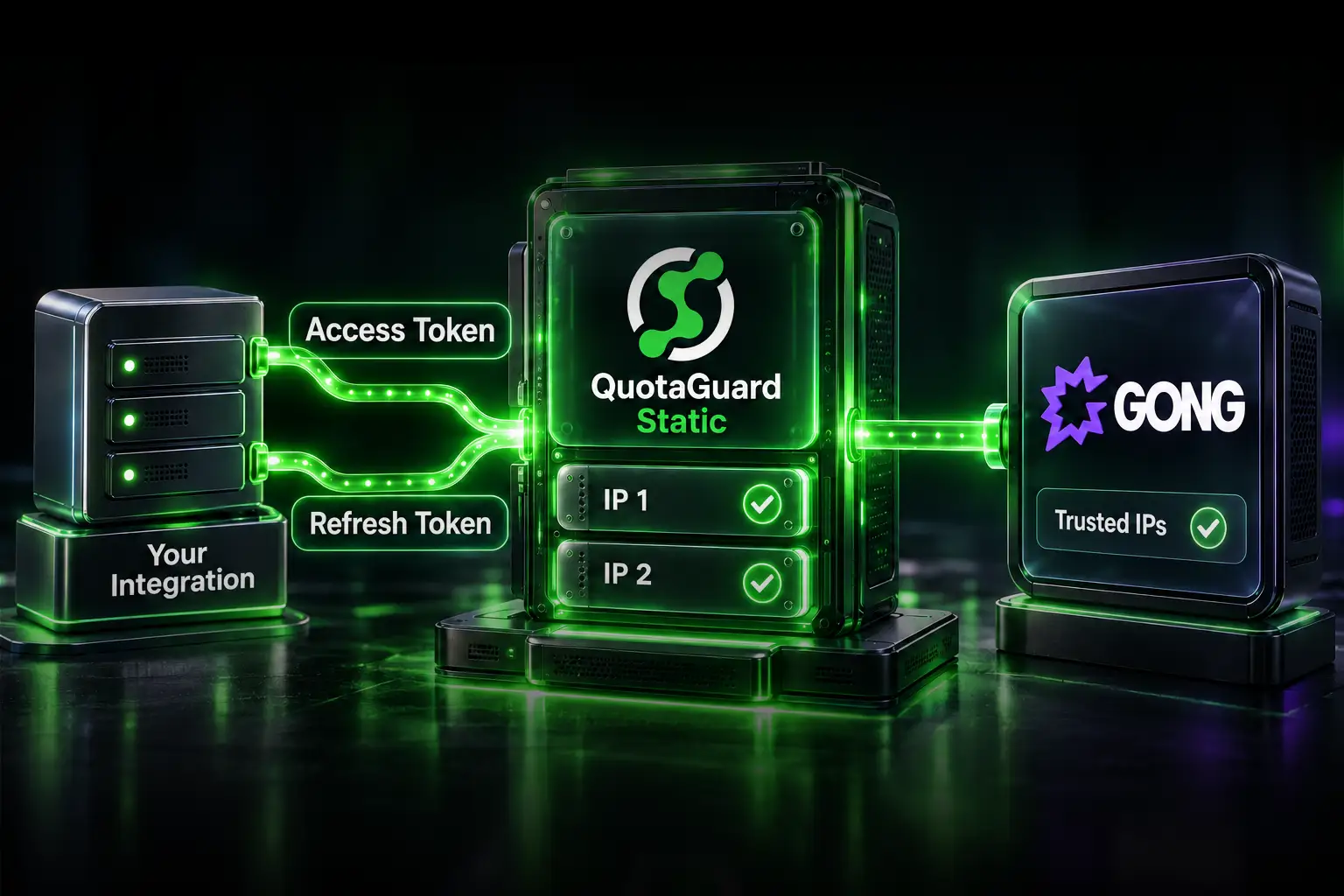
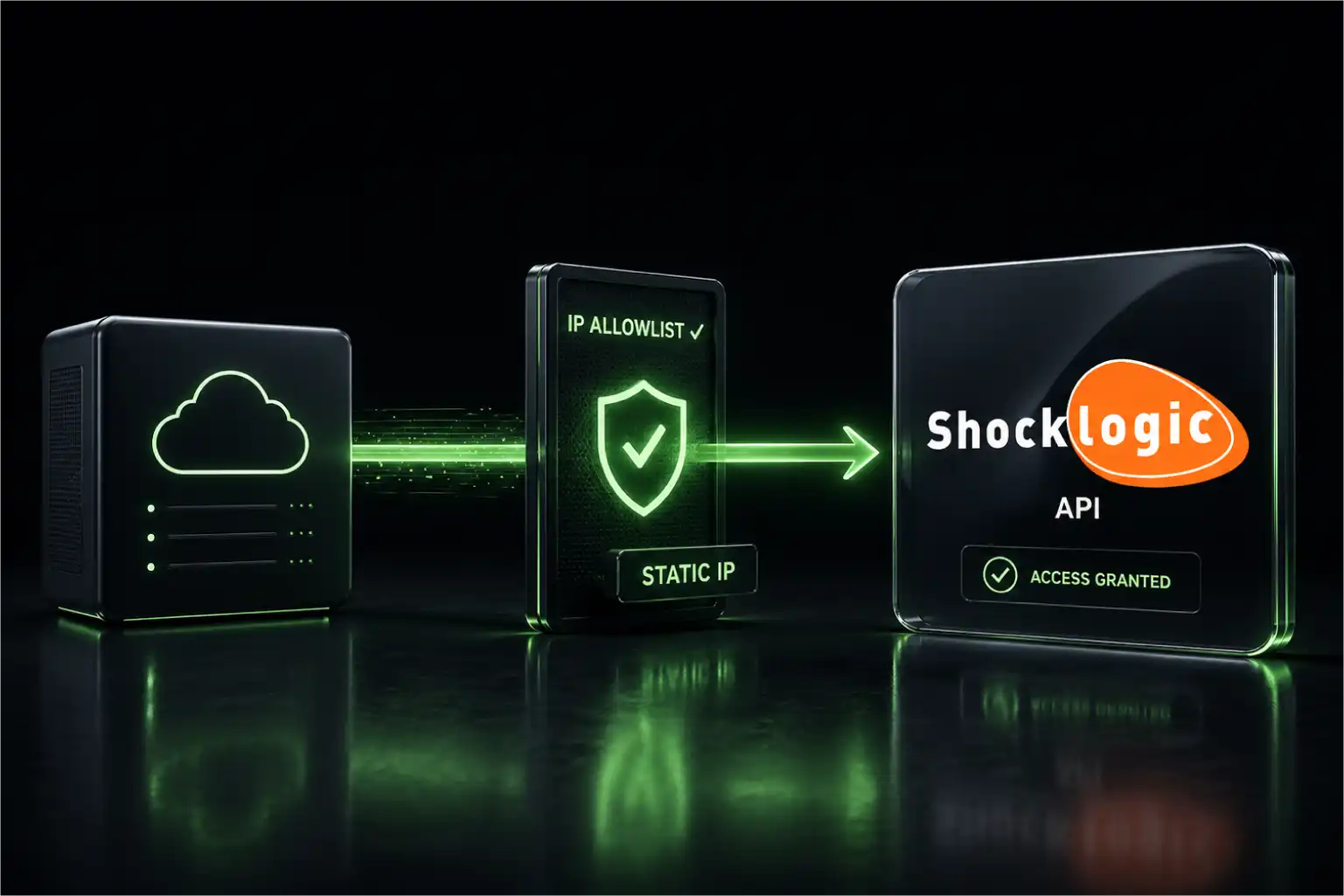
The fix is a proxy with a static egress IP. You route your Shocklogic API calls through the proxy. The proxy has a fixed IP. Shocklogic allowlists that IP. Done.

QuotaGuard tip: route only your Shocklogic API calls through the proxy, not all outbound traffic from your app. It's faster, easier to debug, and keeps your proxy usage low.

QuotaGuard Static Gives Your App a Fixed IP for Shocklogic

QuotaGuard Static is an HTTP/HTTPS/SOCKS proxy running on AWS infrastructure. You get a static outbound IP. Every request routed through the proxy exits from that IP. Shocklogic can allowlist it once and it never changes.

Setup is one environment variable:

QUOTAGUARDSTATIC_URL=http://username:password@proxy.quotaguard.com:9293

Then point your HTTP client at it. Here's how that looks in the most common stacks:

Shocklogic API Proxy Configuration Takes 2 Minutes

Node.js (using axios and https-proxy-agent)

import axios from 'axios';
import { HttpsProxyAgent } from 'https-proxy-agent';

const proxyUrl = process.env.QUOTAGUARDSTATIC_URL;
const agent = new HttpsProxyAgent(proxyUrl);

const response = await axios.get('https://api.shocklogic.com/your-endpoint', {
  httpsAgent: agent,
});

Python (using requests)

import os
import requests

proxy_url = os.environ.get('QUOTAGUARDSTATIC_URL')

proxies = {
    'http': proxy_url,
    'https': proxy_url,
}

response = requests.get(
    'https://api.shocklogic.com/your-endpoint',
    proxies=proxies
)

Ruby (using Net::HTTP)

require 'uri'
require 'net/http'

proxy_uri = URI(ENV['QUOTAGUARDSTATIC_URL'])

Net::HTTP.start(
  'api.shocklogic.com',
  443,
  proxy_uri.host,
  proxy_uri.port,
  proxy_uri.user,
  proxy_uri.password,
  use_ssl: true
) do |http|
  request = Net::HTTP::Get.new('/your-endpoint')
  response = http.request(request)
end

Deploy. Send Shocklogic your QuotaGuard static IP. Ask them to add it to their allowlist. Your integration works from that point forward regardless of deploys or restarts.

Your static IP appears in the QuotaGuard dashboard the moment you provision. It never changes unless you explicitly request a new one.

Shocklogic Event Data Qualifies for QuotaGuard Shield If You Handle PII

Shocklogic integrations often carry more than event schedules. Delegate names, email addresses, membership IDs, dietary requirements, and payment records are common. If your integration handles any of that, consider QuotaGuard Shield instead.

Shield uses SSL passthrough. The TLS connection runs end-to-end between your app and Shocklogic. QuotaGuard routes the packets but never decrypts them. That matters for HIPAA, PCI-DSS, and SOC 2 requirements where a third-party proxy seeing your data in transit creates a compliance obligation.

With Shield, QuotaGuard is not a Business Associate in the HIPAA sense because the data is never exposed to QuotaGuard's infrastructure. The setup is the same as Static with one variable name change:

QUOTAGUARDSHIELD_URL=https://username:password@us-east-shield-01.quotaguard.com:9294

Replace us-east with the region closest to your Shocklogic destination. Swap the environment variable and the rest of your code stays identical.

QuotaGuard Shield direct plans start at $29/month (Starter), with Production at $59/month, Business at $109/month, and Enterprise at $259/month for dedicated IPs and phone support.

QuotaGuard Static Pricing Starts at $19/month

QuotaGuard Static direct plans start at $19/month (Starter). Most Shocklogic integrations running modest API call volumes will fit comfortably in the $19 or $49/month tier. QuotaGuard Static Enterprise is $219/month for dedicated IPs, which is the right call only if you need an IP that has never appeared in any other customer's allowlist. Shocklogic integrations rarely require that.

There's a 3-day trial. Credit card required. You'll know within the first hour whether the allowlist fix is working.

See the full breakdown at quotaguard.com/products/pricing.

If your Shocklogic integration is already broken because of IP blocking, it's a two-minute fix. Provision QuotaGuard Static, set the environment variable, copy your static IP from the dashboard, and hand it to Shocklogic support for allowlisting.

QuotaGuard Static IP Blog

Practical notes on routing cloud and AI traffic through Static IPs.

Reliability Engineered for the Modern Cloud

For over a decade, QuotaGuard has provided reliable, high-performance static IP and proxy solutions for cloud environments like Heroku, Kubernetes, and AWS.

Get the fixed identity and security your application needs today.